
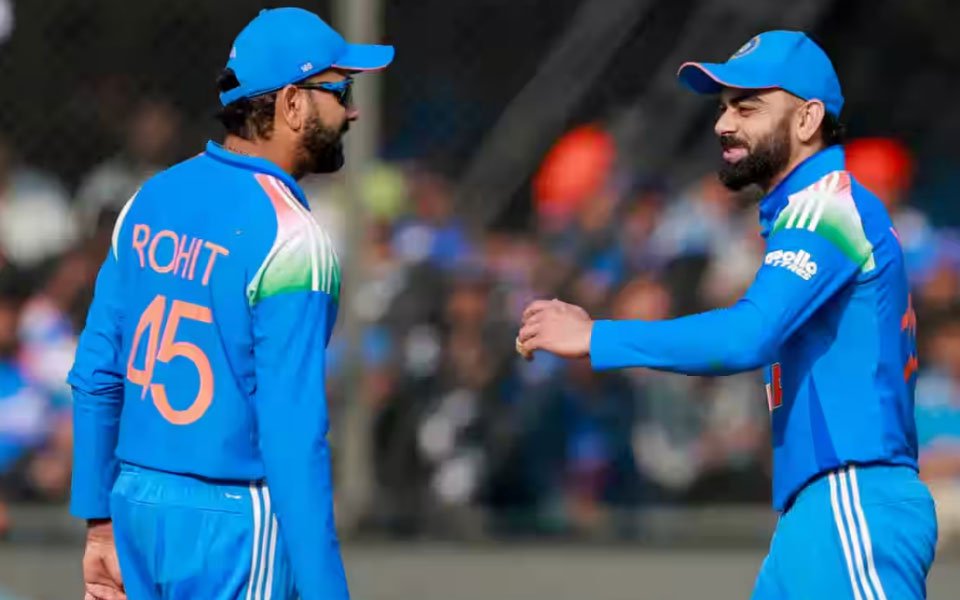
Live Update: Will Rohit Sharma and Virat Kohli play domestic cricket in 2026-27?
Rohit Sharma and Virat Kohli will take part in the Vijay Hazare Trophy for Mumbai and Delhi ahead of the 2027 ODI World Cup. Will Rohit Sharma and Virat Kohli play domestic cricket in 2026-27? (Photo Source: BCCI) The BCCI has issued a policy requiring centrally contracted players to take part in domestic cricket when they are not on national duty.
Under this policy, Rohit Sharma and Virat Kohli are expected to take part in the 2026-27 Vijay Hazare Trophy, representing Mumbai and Delhi respectively as India prepares for the 2027 ODI World Cup. The tournament is scheduled to begin in December 2026. Rohit has already informed the Mumbai Cricket Association of his availability and confirmed that he will be ready to play from December 24.
His participation follows a clear signal from the BCCI that senior players who do not take part in domestic competitions risk being overlooked in the ODI selection process ahead of the 2027 World Cup. He is expected to take part in select competitions in the over-50s competition. Kohli’s situation is less simple.
DDCA president Rohan Jaitley indicated that Kohli would be available for Delhi but his participation remains subject to international workload management. At this stage there is no final confirmation and there remains uncertainty as to whether he will be used throughout the tournament or just in certain games. What does the BCCI policy mean for senior players?
Prior to this policy, senior Indian players routinely skipped domestic tournaments during matches on the international calendar without any formal consequences to their selection chances. The new directive completely changes this position. Centrally contracted players will now have to remain active in domestic cricket during these periods and the BCCI has clarified that compliance will be assessed when assembling ODI squads for the 2027 World Cup cycle.
For Rohit and Kohli, this means that the Vijay Hazare Trophy is no longer a one-off engagement. The policy states that domestic availability is as important as international performance when assessing a player’s readiness and commitment to the 50-over format. Both men are among India’s most experienced centrally contracted players, meaning the policy will ply directly and in full from the start of the 2026-27 tournament.
The practical implications are significant. A player of Rohit’s caliber confirming his availability and reporting to Mumbai sends a clear message to the selection panel about his intention to remain in the ODI setup. Likewise, any prolonged absence of Kohli from the Delhi team, even if justified by workload reasons, will now be scrutinized more closely than would have been the case under the previous, more informal arrangement.
How did Rohit and Kohli fare in the previous Vijay Hazare Trophy? Both players had exceonal innings on December 25, 2025, the opening day of the last Vijay Hazare Trophy. Rohit hit 155 off 94 balls for Mumbai against Sikkim, a dominant knock in List A that highlights his small stature for the format.
On the same day, Kohli scored 131 off 101 balls for Delhi against Andhra Pradesh and led his team to a successful fightback in that match. These shots showed that neither player has lost their ability to perform at the highest national level. With the 2027 ODI World Cup now a firm target on the horizon, repeating such a result in the 2026-27 edition of the tournament will carry real selection weight for both men.
The BCCI policy ensures that opportunities to provide such performances are no longer passed over without consequences.
