
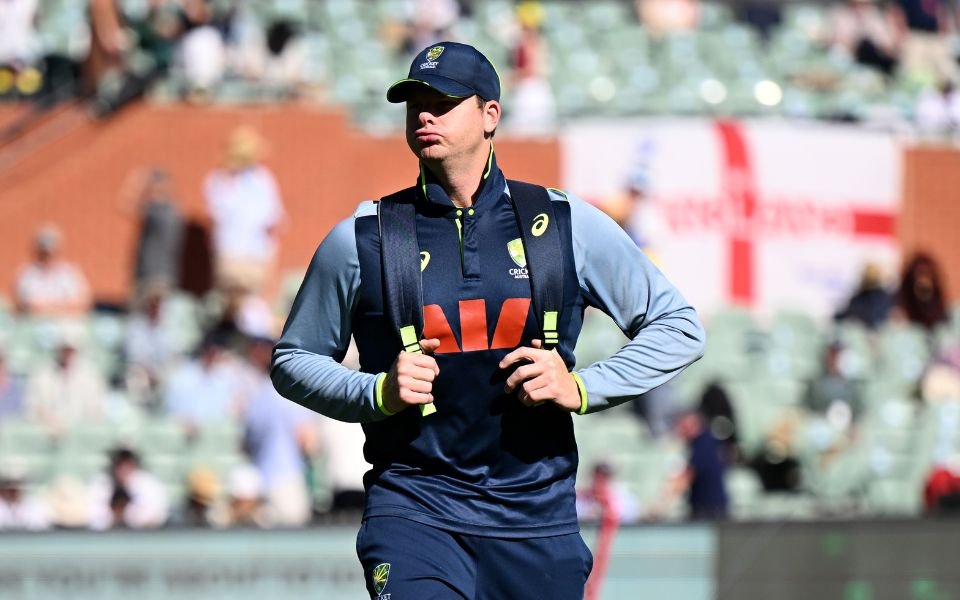
- After the 2018 incident, Steve Smith was more relaxed as a player, said Aaron Finch. Former Australia ctain Aaron Finch believes the leadership ban following the ball-tampering scandal benefited Smith’s batting performance.
- After 2018 incident, Steve Smith was more relaxed as a player, says Aaron Finch (Source: Gareth Copley/) Aaron Finch offered an unusual perspective on what the 2018 ball-tampering scandal meant for Steve Smith’s development as a batsman.
- The Ce Town incident on March 24, 2018, when Cameron Bancroft used sandper to tamper with the ball against South Africa, triggered sanctions that stripped Australia’s leadership in cricket.
After the 2018 incident, Steve Smith was more relaxed as a player, said Aaron Finch. Former Australia ctain Aaron Finch believes the leadership ban following the ball-tampering scandal benefited Smith’s batting performance.
After 2018 incident, Steve Smith was more relaxed as a player, says Aaron Finch (Source: Gareth Copley/) Aaron Finch offered an unusual perspective on what the 2018 ball-tampering scandal meant for Steve Smith’s development as a batsman. The Ce Town incident on March 24, 2018, when Cameron Bancroft used sandper to tamper with the ball against South Africa, triggered sanctions that stripped Australia’s leadership in cricket. Smith faced a 12-month ban from playing and a two-year ban from taking on any ctaincy role.
Finch argued on a broadcast that the two-year holding restriction proved more beneficial to Smith’s hitting performance than the one-game suspension itself. The former Australian white-baller said the difference became parent soon after Smith’s return to the international team. Smith’s dismissal from the post, Finch said, relieved him of a burden that had affected his performance.
“After the 2018 incident, Steve Smith was more relaxed as a player as he was out of control for obvious reasons,” Finch said in the source cited above. How did incarceration affect Smith’s preparation? Finch explained the particular pressure that incarceration placed on Smith’s preparation and mindset.
“Certainly you spend a lot of your time doing things that have nothing to do with your own game,” Finch said. The challenge, he explained, was that Smith’s demanding preparation schedule clashed with the demands of team management. “The amount of work he wanted to do put extra pressure on him mentally because you have to do so much work to feel ready to go, but you still have to take care of everyone else,” Finch said.
What sets Smith’s art art from other elite hitters? Finch was clear in his assessment of Smith’s standing among contemporary batsmen. “He’s by far the best player I’ve ever played with,” Finch said.
Finch emphasized Smith’s willingness to take an unconventional path if it served his performance goals. He says I do it this way, I don’t care how it looks on the outside. That’s what will make me most successful,” Finch said.
Finch went a step further and explained what separated Smith from other elite players with similar talent and work ethic. “When you see what he does when others can’t do it, you can’t explain why players like me or David Warner couldn’t do it, but he could.” “It’s a natural gift, but it’s also hard work, the hours he puts in,” Finch said.
Smith’s performance during the 2019 Ashes series provided evidence that supported Finch’s argument about the benefits of his release from custody. Smith returned from his suspension to score 774 runs in four Tests at an average of 110.57 after missing one game due to concussion. Australia retained the urn and no player from either side got closer than 300 to Smith’s total in the series.